Dried Bean Potage
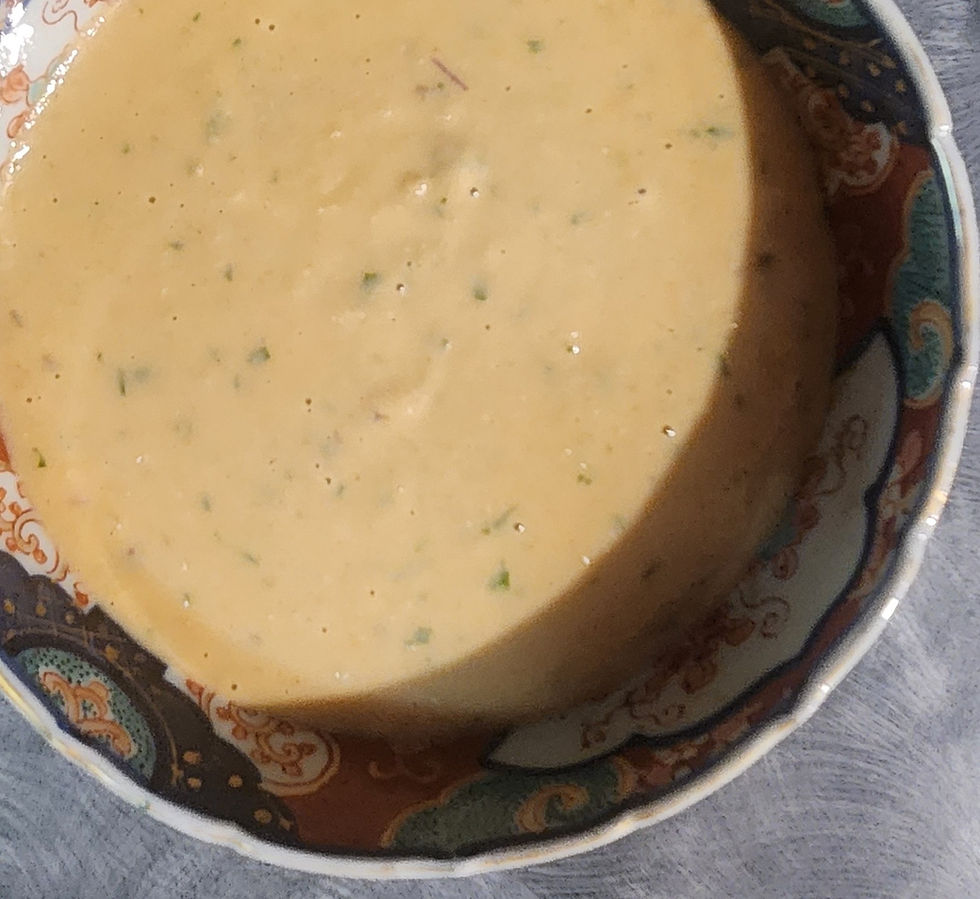
Yay, it's soup season!
There is a distinction between soup and potage that I learned many years ago in Paris, and which has remained firmly embedded in my family's vocabulary ever since. Soup, generally speaking, is vegetables and other ingredients cooked in liquid, with identifiable pieces remaining in the bowl, whereas potage is a soup that has been blended or put through a food mill until smooth. There is, of course, considerably more to the history of both, but this distinction is the one that matters for my purposes.
I spent my junior year abroad in Paris, and since I already spoke fluent French, I was allowed to live on my own rather than with a host family. A friend of mine, however, went to live with the Countess of Something-or-Other (I nearly said she was billeted with her, which perhaps gives you some idea of the arrangement), in a very fancy apartment in the decidedly toney 16th arrondissement. The Countess was a rather stern woman, a stickler for manners, order, and all the other things that might make a young student feel as though she was perpetually on the verge of committing some dreadful social error.
For reasons that probably had very little to do with my actual character, the Countess decided she liked me. I had met people like her before and, having heard many anecdotes about her from my friend, arrived for my introduction to her wearing a demure grey pleated linen skirt, a Peter Pan-collared blouse, and pearls, looking exactly like the sort of young woman described in novels as someone in whose mouth butter wouldn't melt. The disguise was evidently convincing, because after that I was occasionally invited to dinner and even spent an autumn weekend at her château, where the cook discovered after an olive oil forward repast, and to much brouhaha, a rather large dead mouse confited in the metal container of olive oil. But that is an entirely different story.
On one of my dinner visits, we were served a beautiful bowl of puréed bean gorgeousness to begin the meal, pale but aromatic, speckled with green, dotted with tiny croûtons, with lovely background notes of allium and bay. My friend, who was terrified of her hostess, made a determined effort to rise to the occasion and announced emphatically that the soup was absolutely delicious.
The Countess glared at her. "This is not soup" she stated.
My friend, understandably bewildered, insisted politely that it was, and the two went back and forth for several minutes, each apparently incapable of understanding what the other was failing to grasp. I happily downed my soup as a silent participant, while my head went back and forth as though I was watching a tennis match. Eventually, the Countess delivered her point with the finality of someone who had no intention of entertaining further discussion. She wanted to make this young, uneducated American aware that this was actually potage, and anyone should know the difference.
When I told my father about the exchange, he found it every bit as funny as I had, and the Countess's pronouncement became part of our family vernacular. After that, whenever a thick, smooth soup appeared on the table, my father was liable to announce, in his most imperious voice, that "Ce n'est pas de la soupe, mademoiselle, c'est du potage!" (it is not soup, mademoiselle, it is potage.)
Which brings me to today's dried bean potage. I used flageolet beans, although navy beans would work just as well, and the whole thing turned out thick, smooth and velvety, just as I had hoped, a pale pink from the tomato, and flecked with green as it should be. I ate one portion, put one in the freezer for my mom's dinner the next time I see her, gave a deli cup of it to a friend for her Sunday lunch, and now have three delicious and easily digestible fiber-full portions tucked away in the freezer for winter evenings when I simply cannot be bothered to cook. (Yes, that happens.)
Makes approximately six portions.
8 oz dried flageolet beans (or navy beans), soaked overnight and drained
1 large tomato, left whole, peduncle removed
1 medium yellow onion, quartered
3 cloves garlic, peeled and left whole
3 slices jowl bacon, chopped (or approximately 1½ oz ham steak, finely chopped)
2 cups homemade stock
1 cup whole milk
1 generous handful flat-leaf parsley
2 bay leaves
1 Tbsp olive oil
A tiny splash of lemon juice (optional)
Salt to taste
Heat the olive oil in a large saucepan over medium-low heat. Add the chopped jowl bacon or ham, quartered onion, whole garlic cloves, and bay leaves. Cook gently for a few minutes, stirring occasionally, just long enough for some of the bacon fat to render. You aren't trying to crisp the bacon or brown the vegetables. If using ham steak instead, simply warm it through with the onion, garlic, and bay leaves.
Add the whole tomato and the soaked, drained beans. Pour in the homemade stock and enough water to cover everything by approximately two inches. Season with salt.
Bring the liquid to a boil, then lower the heat, cover the pan, and simmer gently over low heat for approximately one hour, or until the beans are completely tender. Check occasionally to make sure there is still enough liquid in the pot, adding a little more water if necessary.
Remove the pan from the heat and fish out the bay leaves. Using an immersion blender, purée the beans, bacon, tomato, onion, and garlic directly in the cooking liquid until smooth. If you don't have an immersion blender, allow the mixture to cool sufficiently before transferring it in batches to a countertop blender, taking care when blending hot liquids. A food mill is another option, although the texture may be a little different.
Add the whole milk and the flat-leaf parsley, then blend again until the potage is smooth and velvety. If it is thicker than you would like, add a little more water or stock until you have the consistency you prefer.
Taste and adjust the salt, place back on the hob and heat through before serving.
Although I strongly suspect that the Countess would have smacked me across the back of the head when she thought nobody was looking for doing this, I added a tiny splash of lemon juice to my bowl of soup before digging in, just to brighten the flavors. Despite that faux pas, I think that she would at least have approved of my remembering to call this potage.
